There comes a point in a successful artist’s career when questions of legacy overshadow the past. Julien’s indulgent prose poem looks to a future so far ahead that it naively misses the filmmaker’s present.
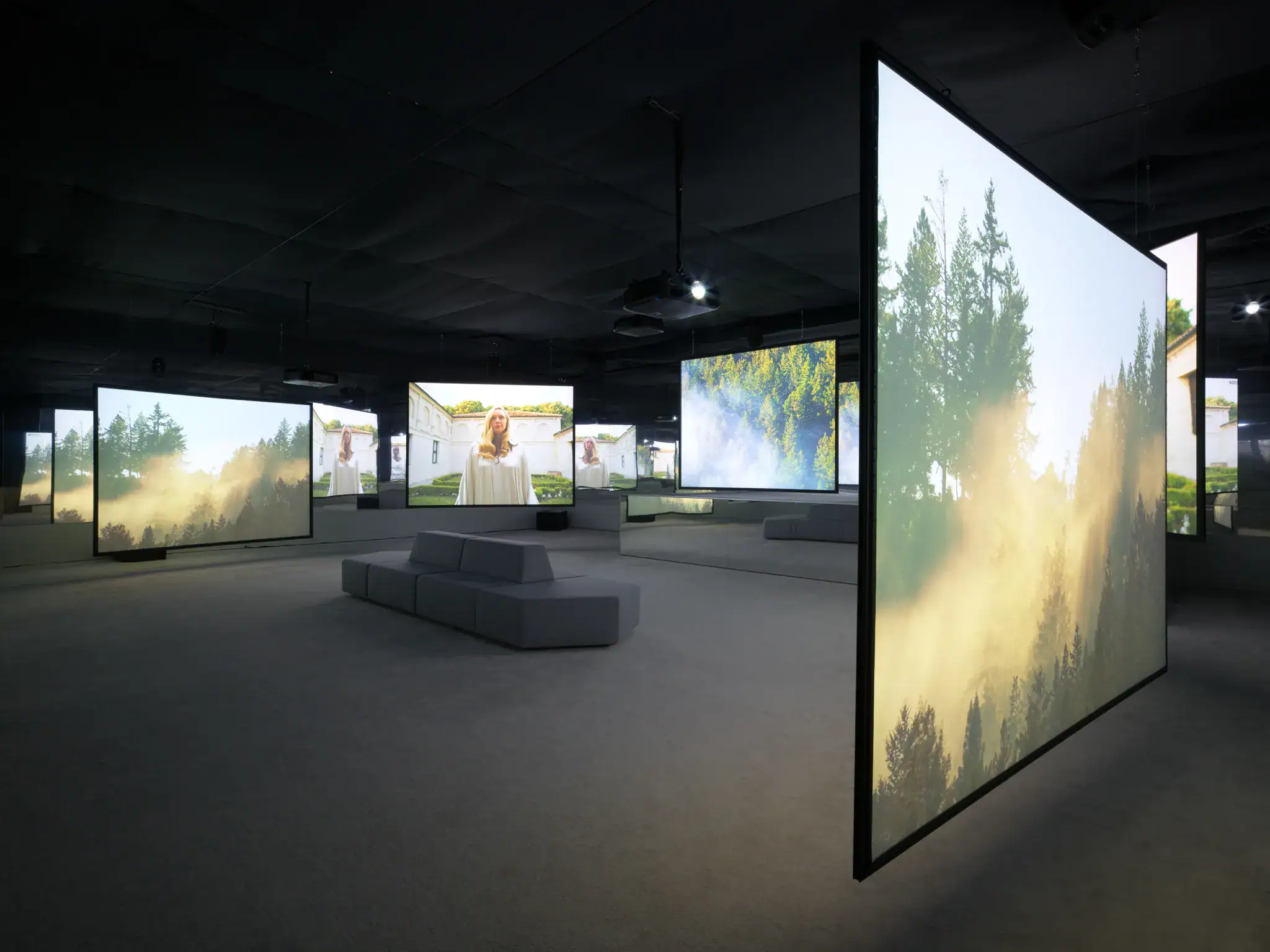
This opulent five-screen installation bemoans our civilisation’s mistakes—unspecified climate disasters, for example—but rests easy in nature’s healing powers. It dwells in the transience of civilisations—posing two sci-fi priestesses in the West’s future ruins—yet still takes the credit for all their achievements.
Julien once seduced his viewers with stories. Here, only the images dazzle. Next to the green forests, airy Modernist pavilions, Renaissance interiors, and mirror surfaces, the film’s narration—a tiresome, not quite post-history, not quite post-species medley of twentieth-century feminists—is facile and incoherent. In the cut, this idle fancy is detached from here and now, and already shows signs of ageing.