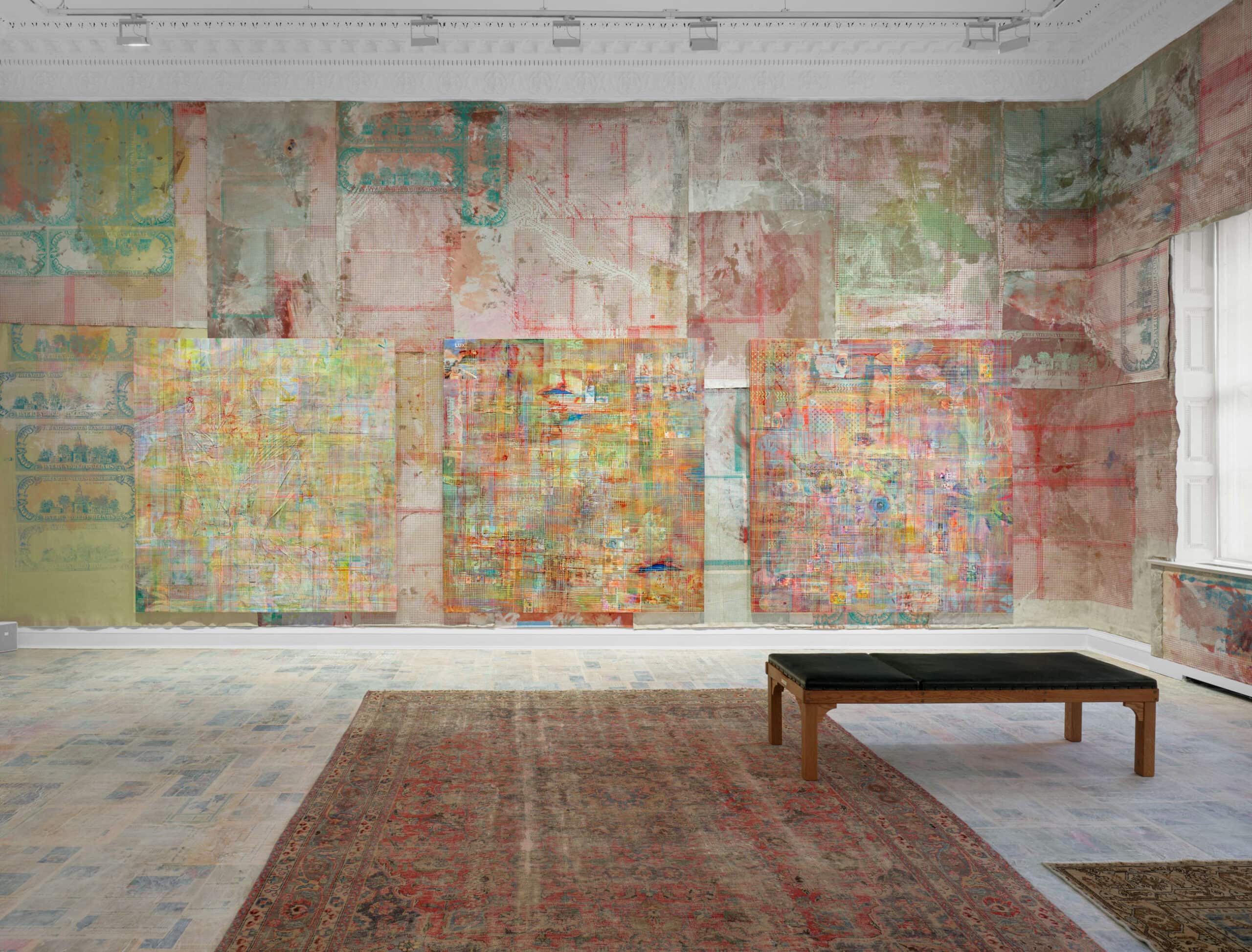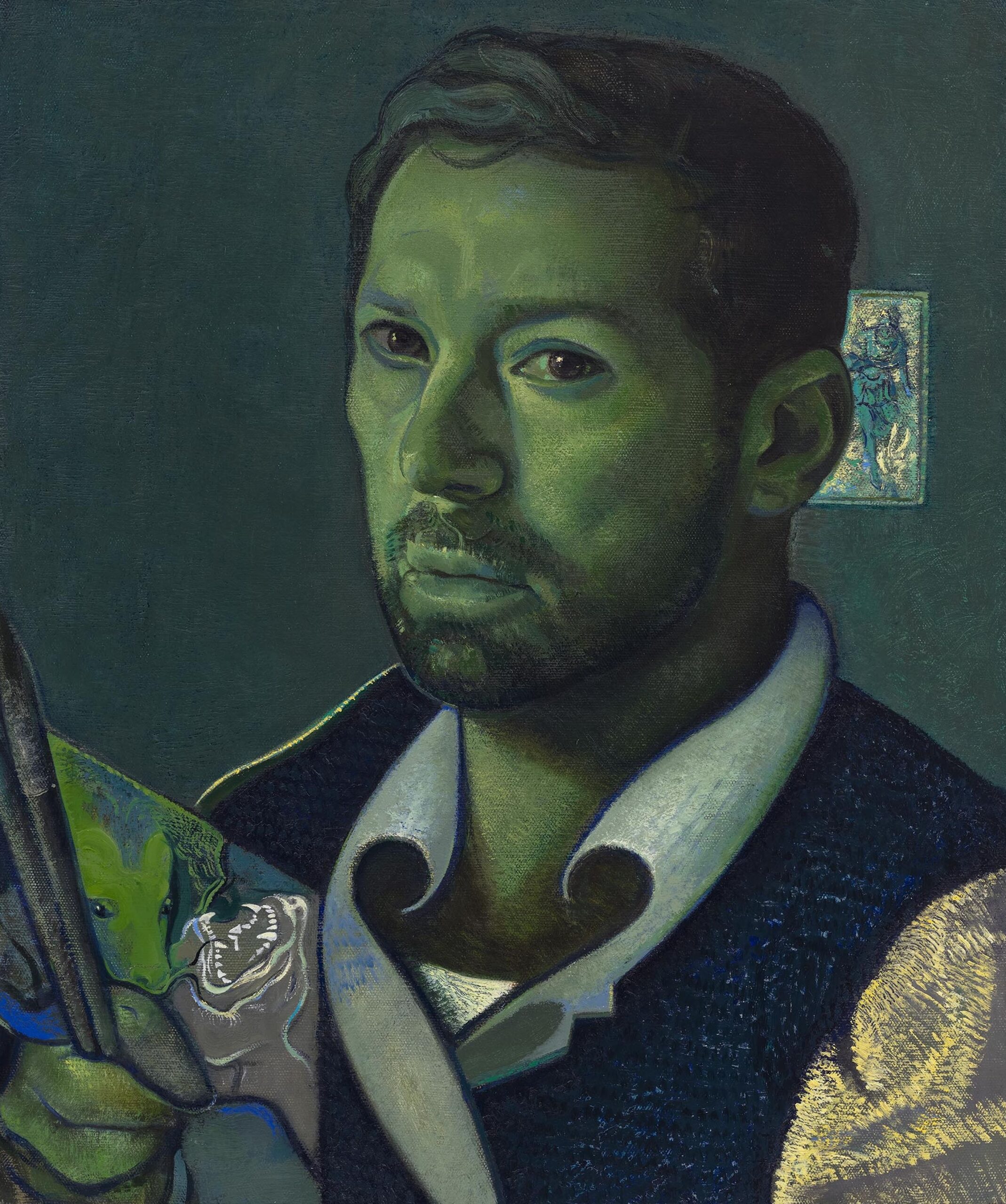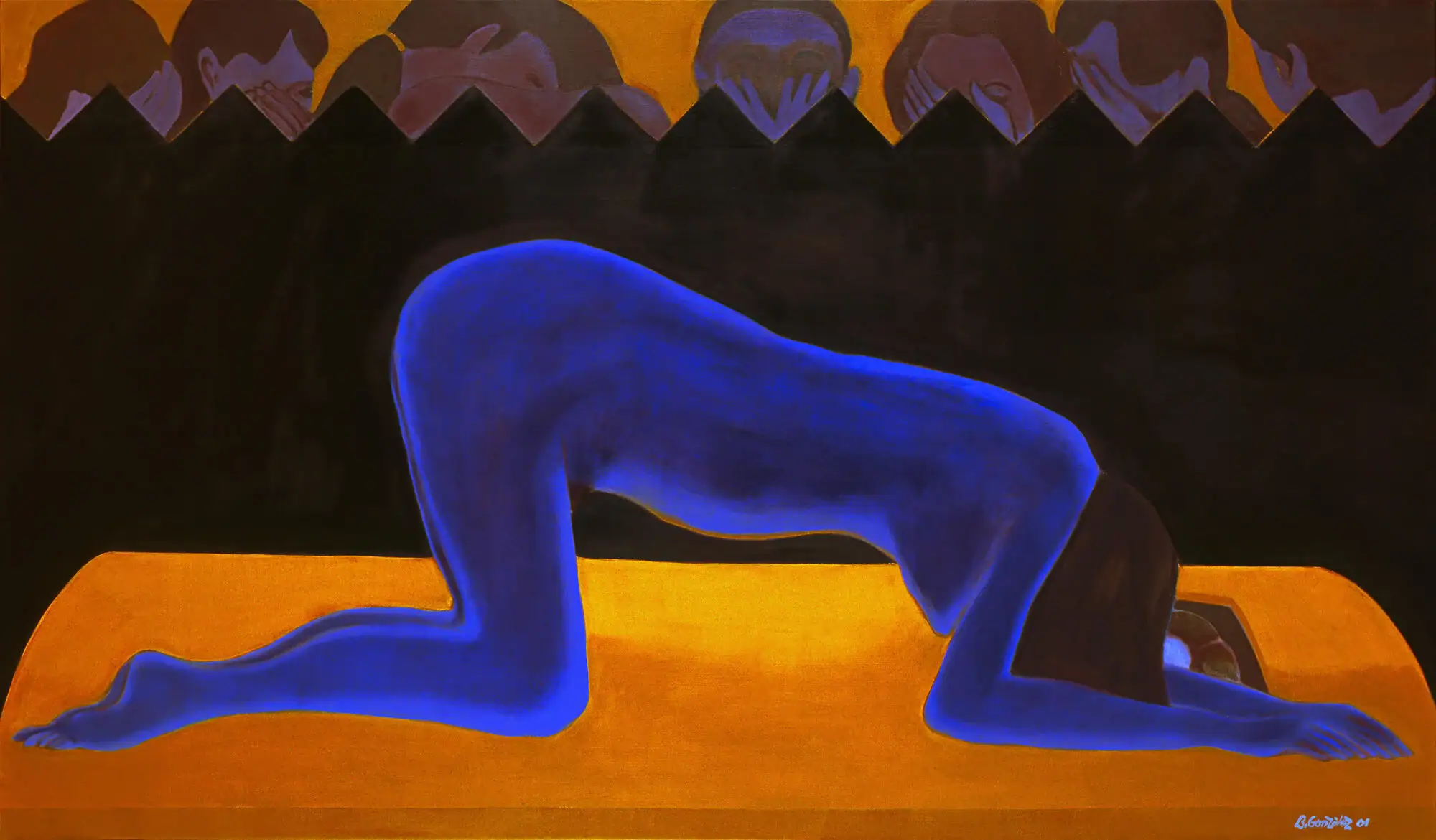
The Colombian González spent the 1960s studiously rephrasing European old masters into South America’s collage and print culture. She then applied the same exercise to the early Modernists and Western magazine imagery.
The results of this practice are iconic—what’s more 1970 than a Pop art Last Supper on the top of a dining table?—but they are also unremarkable as third-worldly knock-offs. Even the exhibition’s clumsy narration of González’s practice as feminist and decolonial resistance doesn’t excuse the volume of her copy-and-distort production. The Barbican’s cavernous galleries encourage such curatorial indulgence. This does González a disservice. When her work turned to closer matters in the 1990s, this retrospective has run out of steam.
Yet it is the collaged images in which Gonzáles captured Colombia’s unending guerrilla warfare, corruption, and ever-present death that are extraordinary in her oeuvre. They combine grief with eerie ideas of leisure. She stacks caskets next to monoblock chairs; the poolside is for sun-seeking and for revenge by drowning. The show’s arc misses these works’ true contradictions: cartoonishly remaking Guernica saved no one, and the Colombian state bought some of the painter’s most politically damning works.