It is easy to forget that societies just like ours already have solutions to old anthropological problems. We prefer to reinvent the former and ignore the latter. Spain’s corrida, for example, makes more sense in animal rights discourse than in pre-Medieval legend. That this ritual of sacrifice survived the Enlightenment embarrasses our modernity.
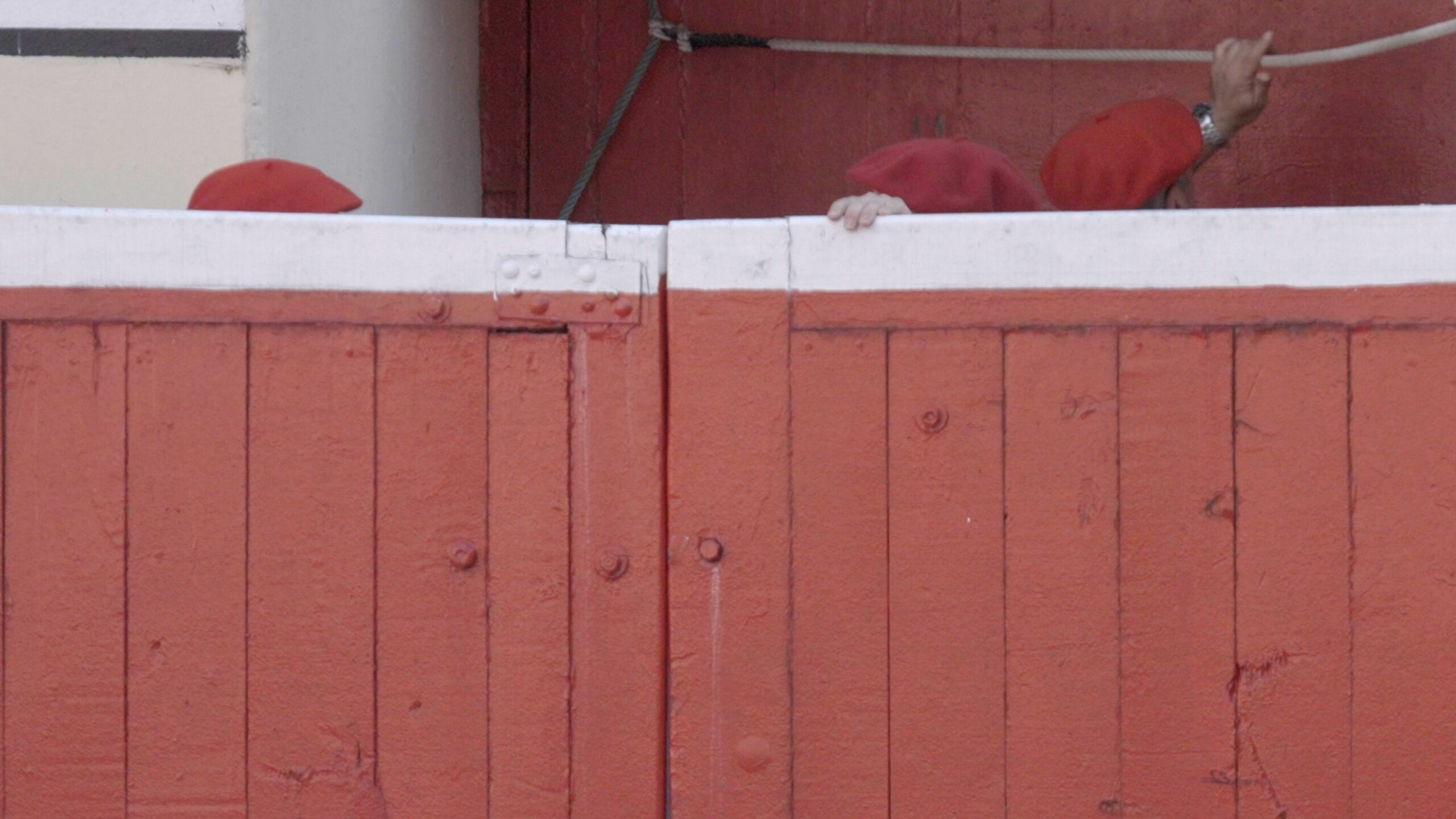
Pfeiffer’s video study of the bullfighting arena dismisses such denialism. The artist’s camera scans the crowd, singling out in close-up the ceremonial band. Music, applause, and clamour signal the ritual’s importance. The throng’s facial expressions attest to their reverence. These rites have roots that are our own.
Pasodoble is spectacle without spectacle, and no bloodthirst permeates the amphitheatre. Pfeiffer is known for removing the crux of his subject, and here, he denies the art audience the ultimate payoff: he never shows the bull and the matador in focus together.
The film abstracts the fight into a dance: the bull and the killer depend on each other in a liturgy. The matador’s grace bestows the beast with lightness, the kind of which one now only finds in scripture. Pfeiffer’s portrayal of a bloodletting sport thus finds a social technology that serves our century of the scapegoat better than many others.