This review originally appeared in the December 2026 issue of The Critic.
The problem of contemporary culture, or so goes one line of critique, is that it no longer sustains the rituals that once mediated the world for us. Contemporary art, in this indictment, is the creation of ahistorical rootlessness. Its forms have become so arbitrary that they fail to sustain fixed meaning.
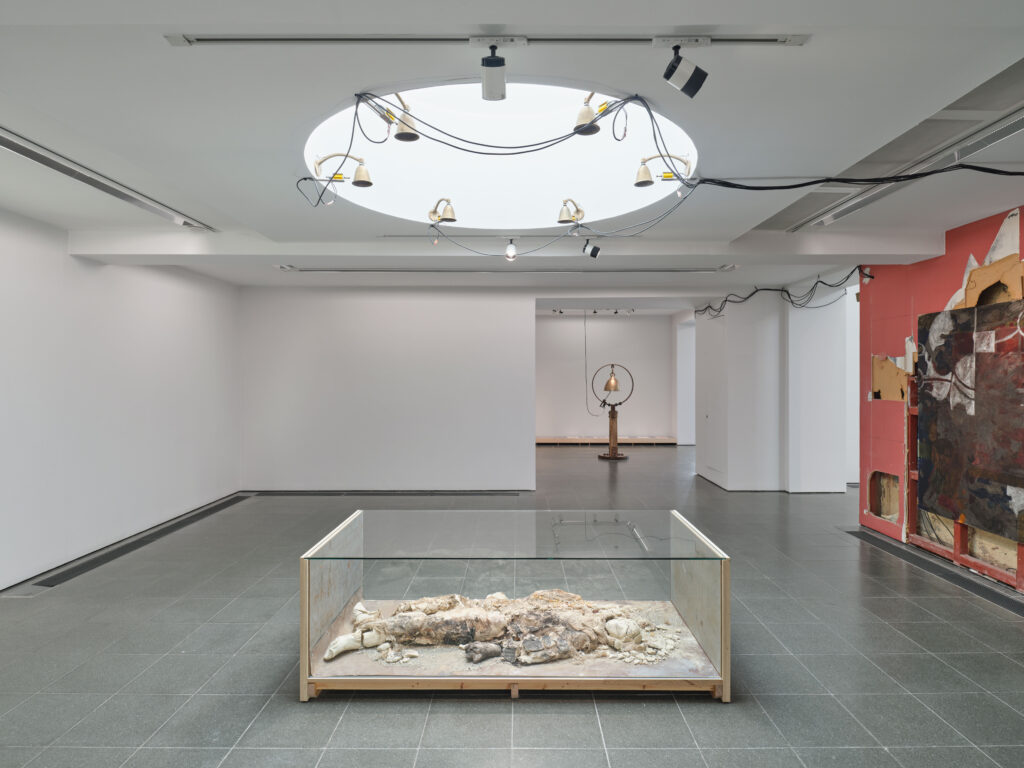
What if the opposite were true, however, and art is still inescapably ritualistic? The Tokyo-born American artist Justin Caguiat’s exhibition Change Ringing at London’s Serpentine nods at many sacramental universals. Bronze bells shaped after plants and flowers dot the gallery’s walls and hang from ceilings and on pedestals, for example. Their knells, triggered in a sequence by electronic microcontrollers, the strikes’ wiring exposed, fill the pavilion with song.
It takes no more than a few of these staccato tones heard already outside the gallery to force a visitor into a quasi-meditative state. At the exhibition’s entrance, Caguiat placed a broken-up sculpture of a human body made of clay, flour, and jute and adorned with a single dry rose. This glass-encased tomb recalls the ash-covered figures of Pompeii and immediately adds another ancient rite to the project’s conceptual repertoire.
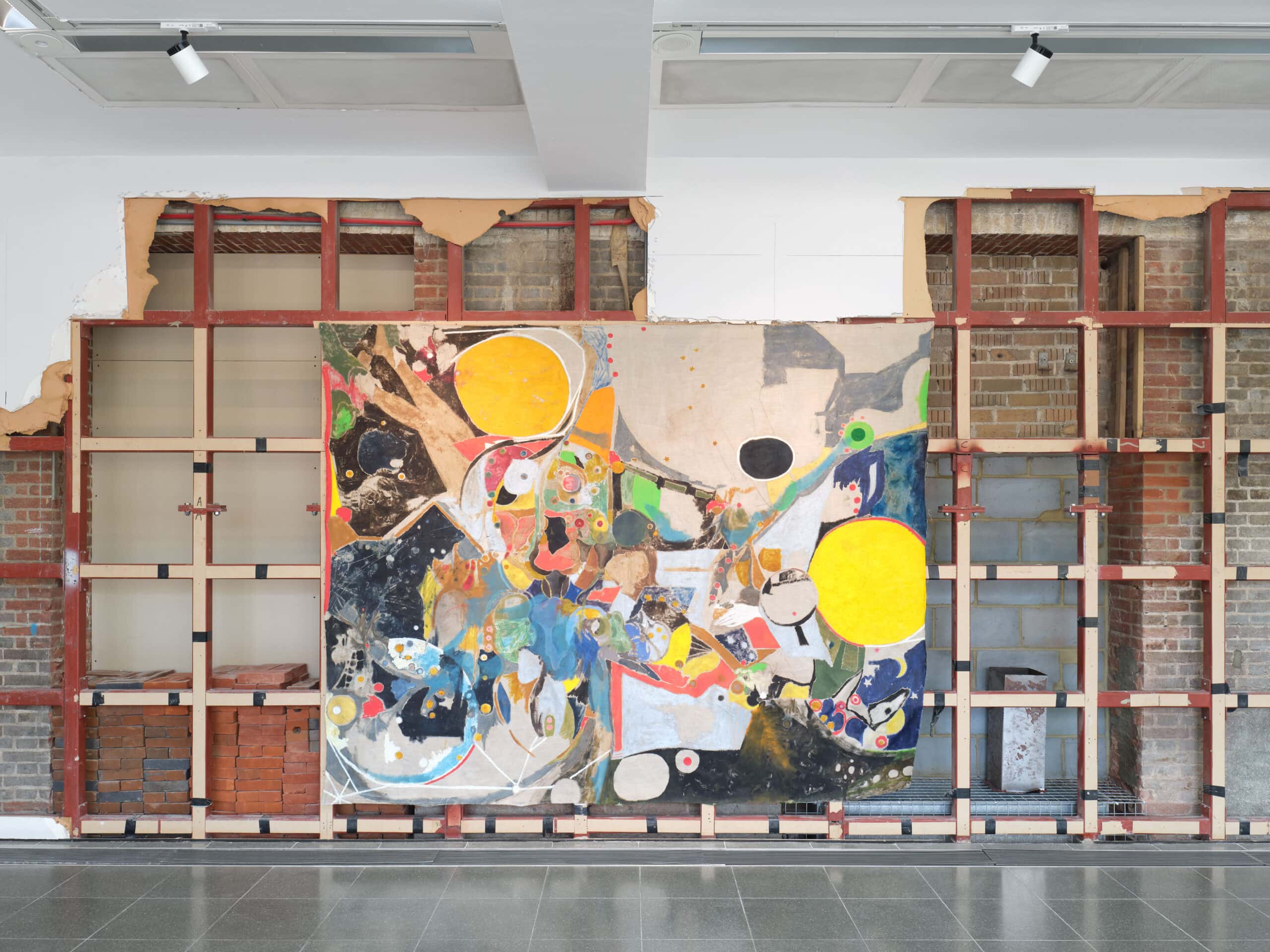
These elements bring the functional proximity of galleries and temples into focus. Indeed, some of Caguiat’s unstretched paintings first hung in an austere mid-century modern church in Madrid. These pictures’ semi-abstract nature — they combine geometries of aerial photographs, crowd scenes, or assemblies from art history — demanded greater aesthetic engagement from the viewer than figurative works would have in their place. At the Serpentine, the colourful canvases are suspended over gallery walls that have all but crumbled, revealing the brickwork underneath the peeling drywall.
Images: Justin Caguiat: Change Ringing, installation view, Serpentine South, 2026. Courtesy Serpentine. Photo: George Darrell.
The exhibition continues at Serpentine Gallery South until 10 January 2027.