Can the gallery embrace unofficial culture?
This review originally appeared in The Critic.
Cultural institutions love to flirt with the eccentric as much as they love to rediscover ideas they only recently abandoned. In art galleries, which have tended to side with the rational, periodic reappraisals of concepts like witchcraft or the occult, such as the 2020 touring exhibition Not Without My Ghosts, narrate incremental shifts in culture’s relationship with Enlightenment logic. The recurring celebratory incorporation of outsider art into the mainstream, like in the 2013 Venice Biennale The Encycopedic Palace, marks even contemporary art’s reliance on ideas cultivated outside the establishment. Elsewhere, one might expect the recent resurgence in religious interest to spark speculation about future aesthetic forms that break with the cold cult of organised reason.
For folk, a culture that by definition emerges without coordination, stimulated revivalism has been the default state since the late nineteenth century. Phantasmagoria, a group exhibition of “folkloric sculpture for the digital age” at the Henry Moore Institute in Leeds, pursues multiple such renewals at once. Bringing together video born out of internet horror, post-human sculpture, and AI-induced hallucination, the show catalogues and institutionalises the unsettling influence of unregulated social and media technologies on unsanctioned culture.
In the exhibition, Amsterdam filmmaker Rustan Söderling’s 2022 Virus Meadow, which animates the Green Man and a skeleton ghost engulfed in flames promenading through a frozen forest, serves as a symbolic link to pre-twenty-first-century conceptions of folk. This is spectralism for the CGI generation, haunted by climate change as much as it is by spirit tales. It is hard to imagine that such ideas could carry on today in the “real world”; they rely instead on the infrastructure of art institutions and cloud servers.

Steph Linn and Philip Speakman’s 2026 video installation, After the Vale, shown in frames spun with sheep’s wool, narrates the failed sixteenth-century Kett’s rebellion against the enclosures in Norwich. The peasants’ accounts ventriloquised in the triptych are compelling even if they end tragically. Yet this artefact miscasts craft as a quaintly rural, rather than primarily utilitarian aesthetic, and arbitrarily relegates an aspect of history to legend. Its talking heads sound like fictional characters in an online role-playing game. They could, conversely, have been extracted from today’s social media, where their veracity would be subject to different tests.
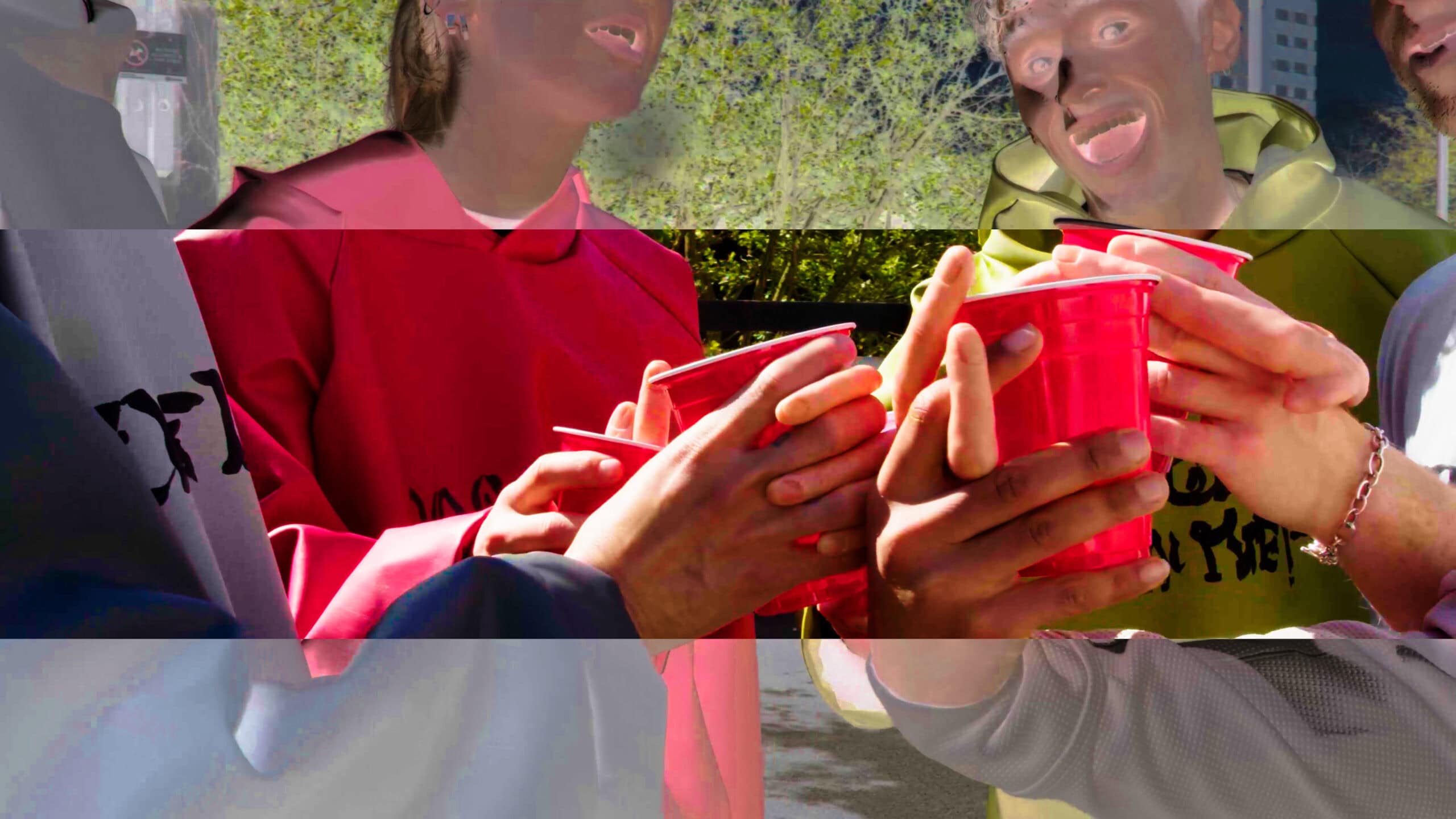
Phantasmagoria at Henry Moore Institute, Leeds, continues until 30 August. Main image: Nina Davies, Image Syncers (video still), 2025. Courtesy the artist.