This review originally appeared in the June 2026 issue of The Critic.
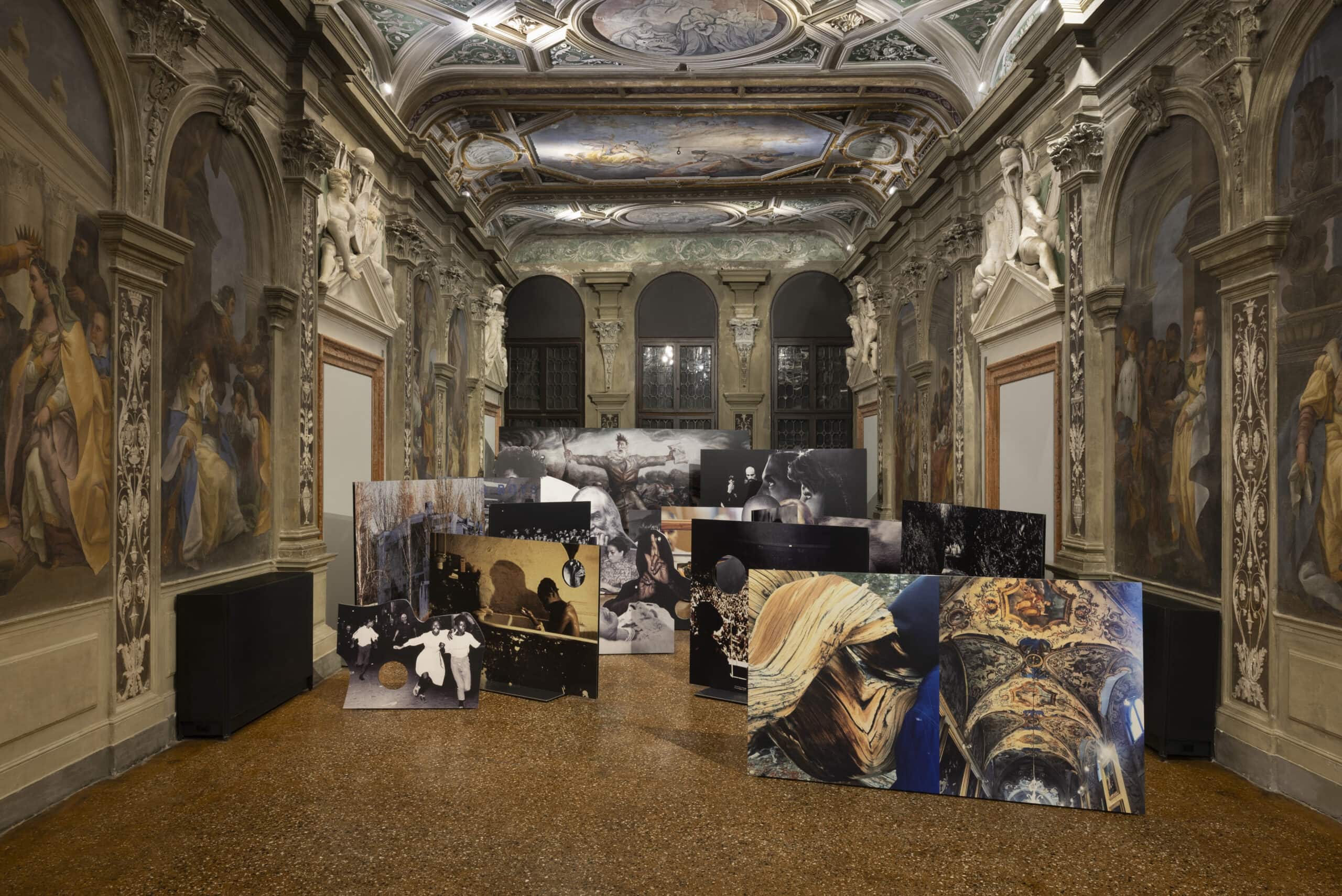
Fondazione Prada in Venice, housed since 2011 in a Baroque palace on the Grand Canal, has a history of staging exhibitions that challenge the much larger, international Biennale with their ambition. This year’s Helter Skelter, a two-hander by Americans Richard Prince and Arthur Jafa, nods at a monumentality that, as the internet meme goes, “the European mind cannot comprehend”.
Prince, born in 1949, is best known for his obsessive appropriation of commercial and popular forms, often set within his painting or turned into sculpture. His sampling of archetypes from publicity (decontextualising the Marlboro man in a 1989 series, for example) and more recently celebrity Instagram feeds has made him a worthy conceptual successor to Andy Warhol. This practice has broken art market records and resulted in multiple copyright infringement claims.
Jafa, a decade Prince’s junior, is just as prolific a pilferer, working often with found video footage and music, as well as the still image. His references are more restrained, however, and pertain to a narrower selection of the American experience, namely, black culture and its historical and religious manifestations. For example, Jafa’s 2016 film Love is the Message, The Message is Death, included in Helter Skelter, is an anthem composed from numerous music clips, news footage, and wedding videos edited to the rhythm of a gospel choir.
Helter Skelter continues at Fondazione Prada, Venice until 23 November 2026.
Main image: Arthur Jafa, Viriconium, 2026. Photo Andrea Rossetti, courtesy Fondazione Prada.