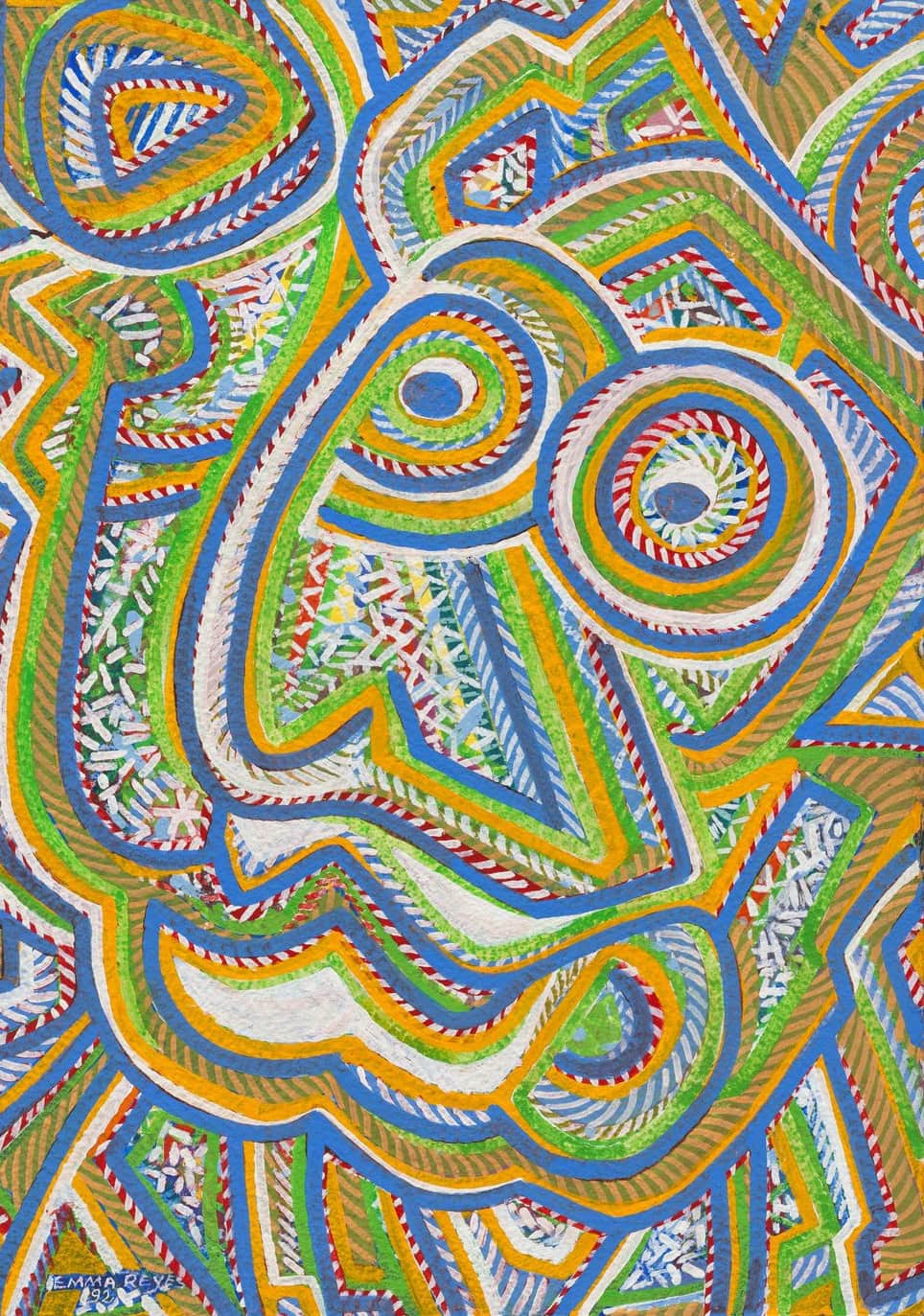
The paintings of the late Colombian Emma Reyes — abstracts of lines, spots, and colours that only occasionally amount to nature or the human — are remarkable for the cultural confusion they induce decades, if not centuries, after their making. The bright acrylics of the 1990s, for example, borrow from only loosely defined, pre-Modern pictorial traditions of South America. Such mark making today reads as “indigenous”, but whom that indigeneity belongs to is not obvious.
Reyes’s project may have been one of reclamation; today’s viewer owes it no aesthetic allegiance. To an untrained eye, these “borrowings” could plausibly come from pre-colonial Australia or — where Reyes overtly asserts her skill — the Europe of Arcimboldo. In other words, everywhere.
Dwelling in pictorial simplicity that we must take to be universal, Reyes’s designs pull the rug from under claims of foundational cultural difference on which they rely when seen out of context. To recognise Reyes’s paintings as images at all is thus to pursue the picture’s most primordial form.