The art market is a perversion of trade. That today’s artists routinely oppose “capitalism” but crave a moral carve-out for the circulation of their work only proves this. We believe the problem itself to be art, even when nobody highlights it explicitly.
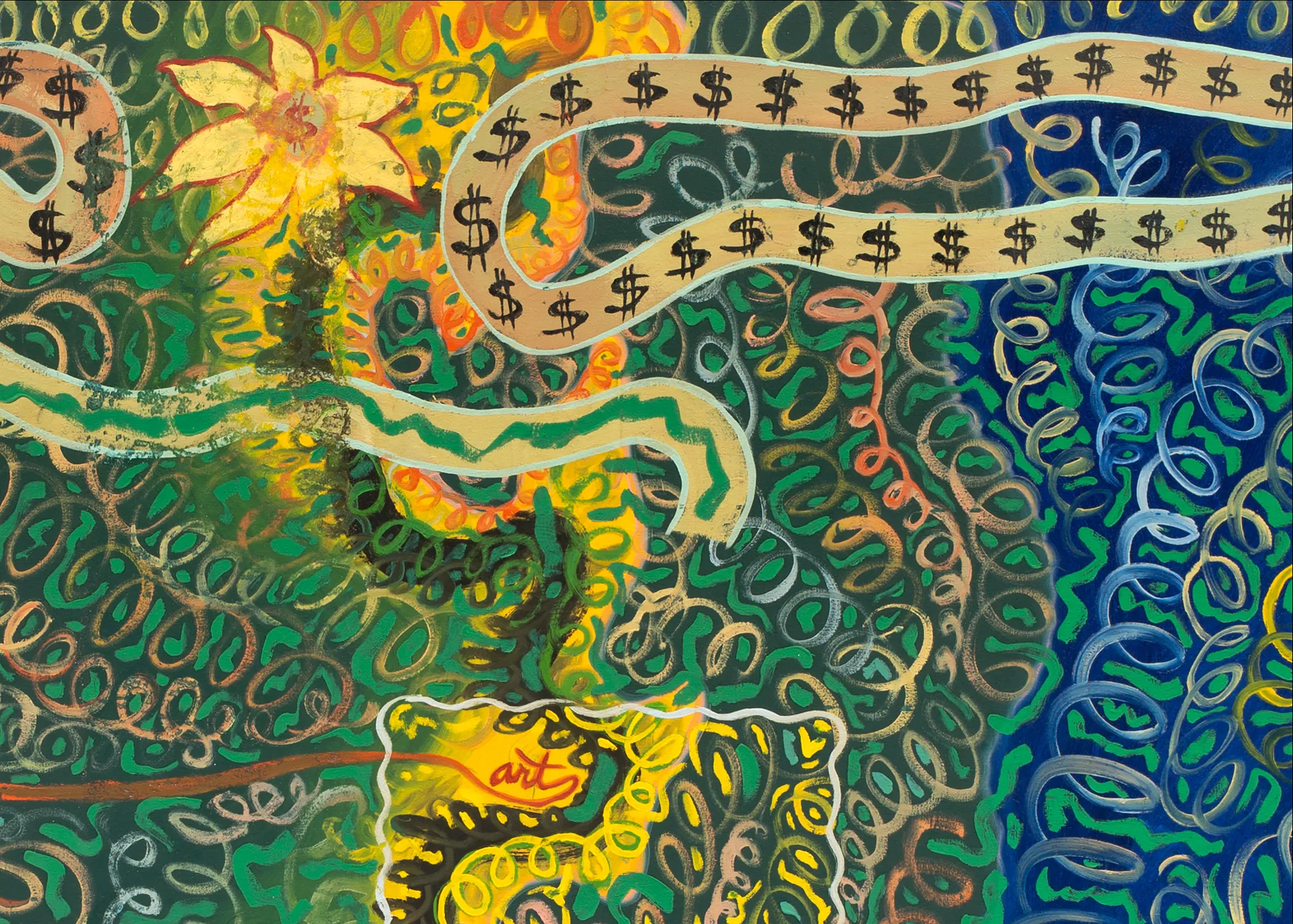
Tweddle, who obsessively painted dollar signs into his quasi-pop, quasi-psychedelic canvases trimmed to non-commodity shapes, was an example of such projected dissent eating itself. Labelled an “outsider”, he banked a show at MoMA and landed in the collection of the MET.
His cartoonish oils and acrylics have a charm to them, granted. Their quintessentially American atmosphere — big agriculture, trucking, the sexuality and industry mixing in the landscape itself — is seductive, although not enough to call for continued investment when the returns are doubtful.
Pairing these sequences with Landy’s 1991 flower market stall — whose survival may well be the result of insider trading — is more poignant than the frame of a commercial gallery would normally allow for. Nothing here disrupts the market, freeing the eye from the wallet.