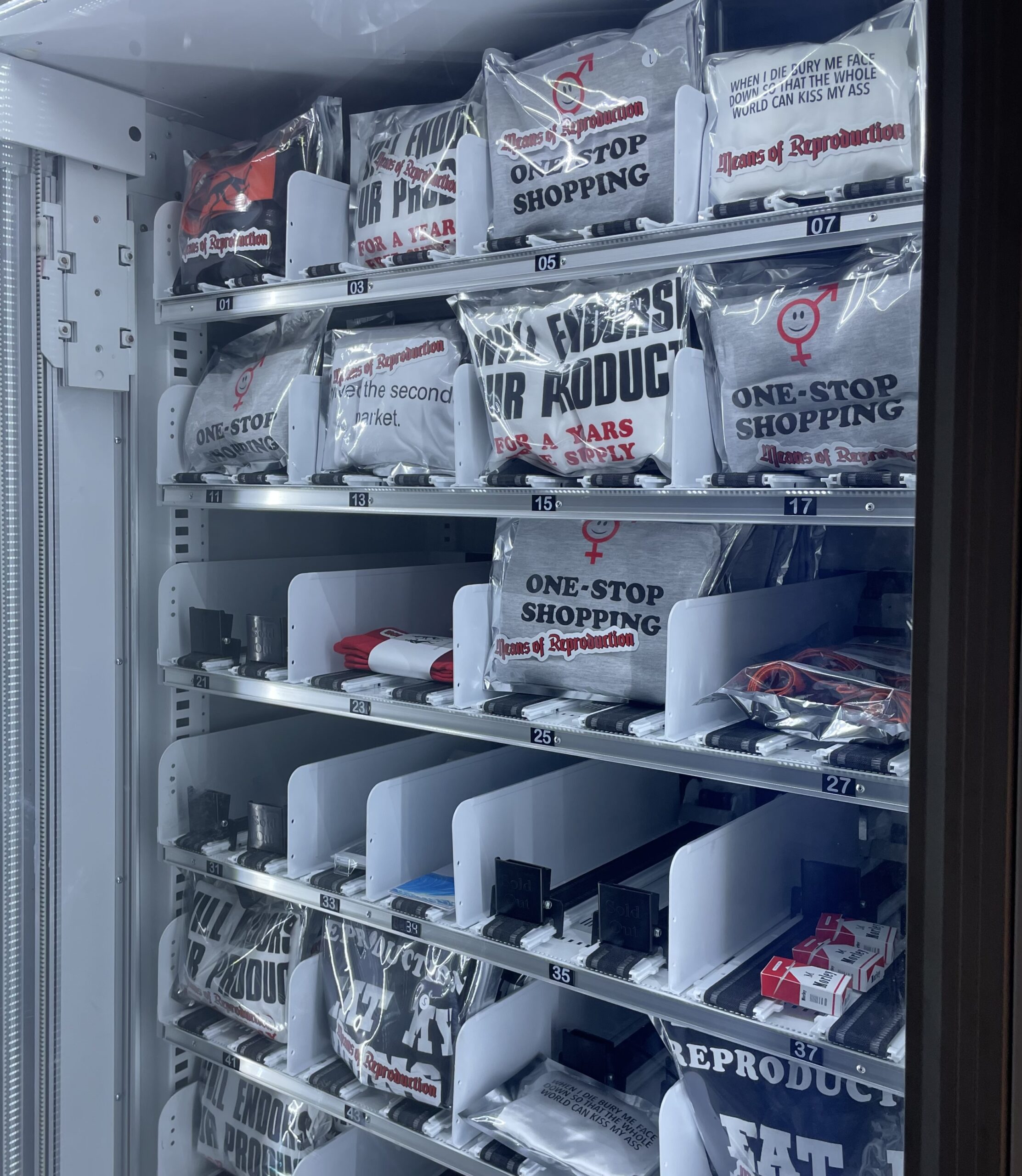
Turning the gallery into a gift shop – of arty t-shirts, tote bags, and homeware – is the dealer’s gimmick of last resort. It turns critique itself into a commodity, revealing, to anyone still somehow unaware of it, the art object’s elusive claim on value.
The same art pop-up, perversely, denies the artefact the aesthetic efficiencies of mass, non-curated markets. The temporary stall thus gives artists the illusion of a safe space in the global supply chain. So long as they stay off the balance sheet, they risk losing track of their wares’ aesthetic merit.
These non-trading artists did, and their works are dully indistinguishable from the stock of the fashion concept store next door. The ‘meta’ of this trade, then, might well be that consumption is the greatest form of anticapitalism. What it looks like – and what it sells – is as good as irrelevant.