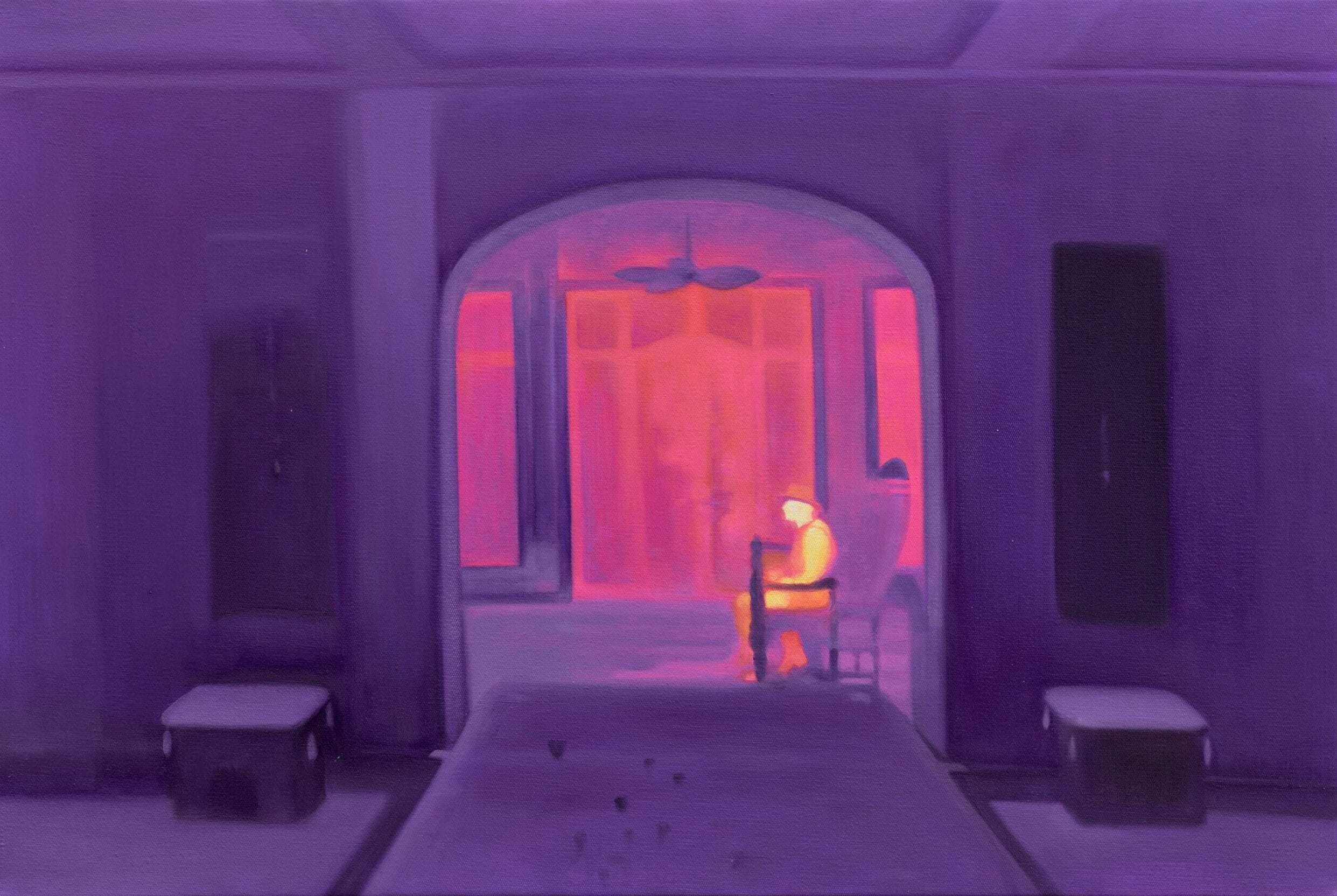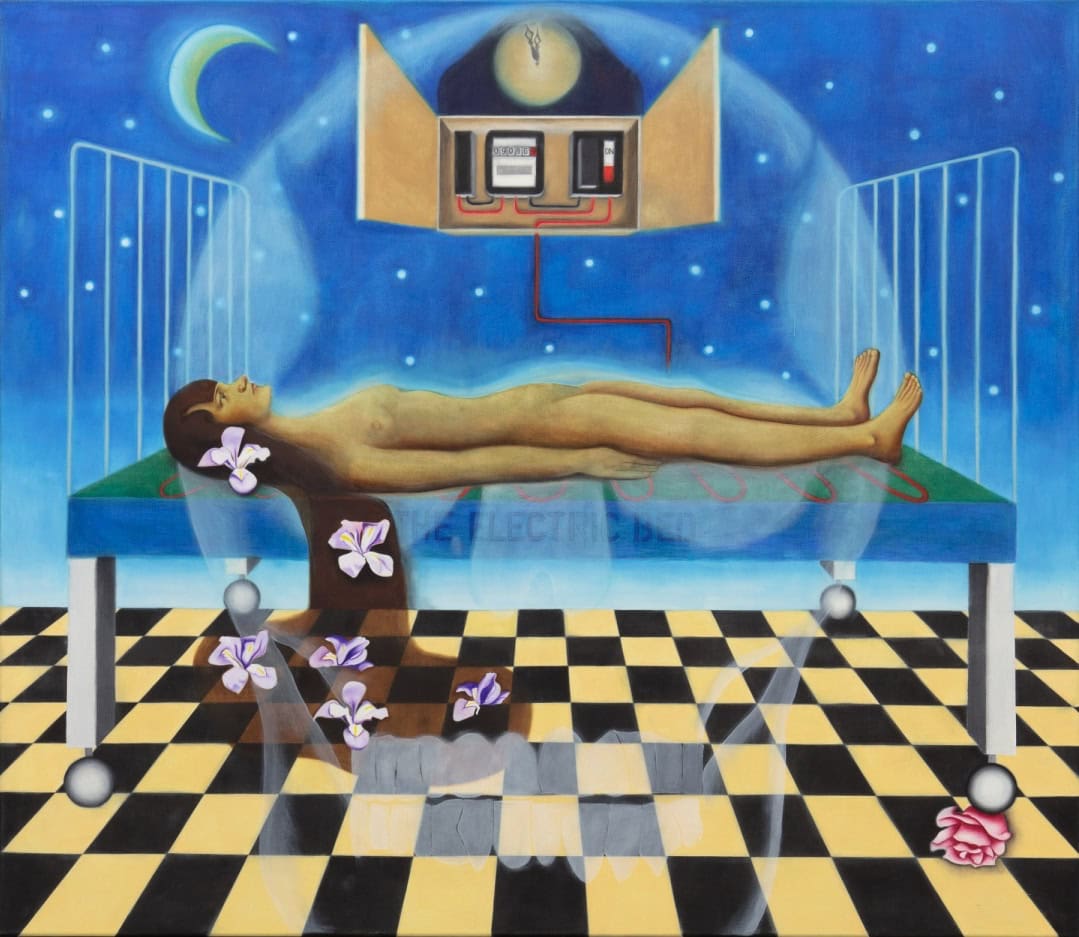
Does an artist get to participate in the construction of her outsider status? Francis’s oils, sent up to London by her Oxfordshire estate just in time to coincide with Tate’s Kahlo “mania”, reflect on the painter’s confinement in a mental health hospital following a breakdown. These studiously executed self-portraits in anguish are inflected with heavy doses of surrealism, its sources anachronistic and purpose unclear. Francis communes with death on one canvas, with spirits and fairytales on another. These compositions show no sign of the peril a breakdown might involve.
Banally chosen fragments of biography reveal that the painter’s method was spurious: it’s not madness that gave rise to these paintings but a decade’s distance and planning. Kahlo inspired no end of copyists, as Tate vacuously reminds us. But a set of pencil drawings, which Francis made even later, brims with the unfeeling precision of facsimile. Even her titles, one puzzlingly borrowed from Hirst, suggest her mythmaking was deliberate. It is no excuse that this oeuvre found an audience (such as it is) only too late for her to share in the spoils.