notes and notices are short and curt reviews of exhibitions at (mostly) London galleries.
 Thanasis Deligiannis, Yannis Michalopoulos
Xirómero/Dryland
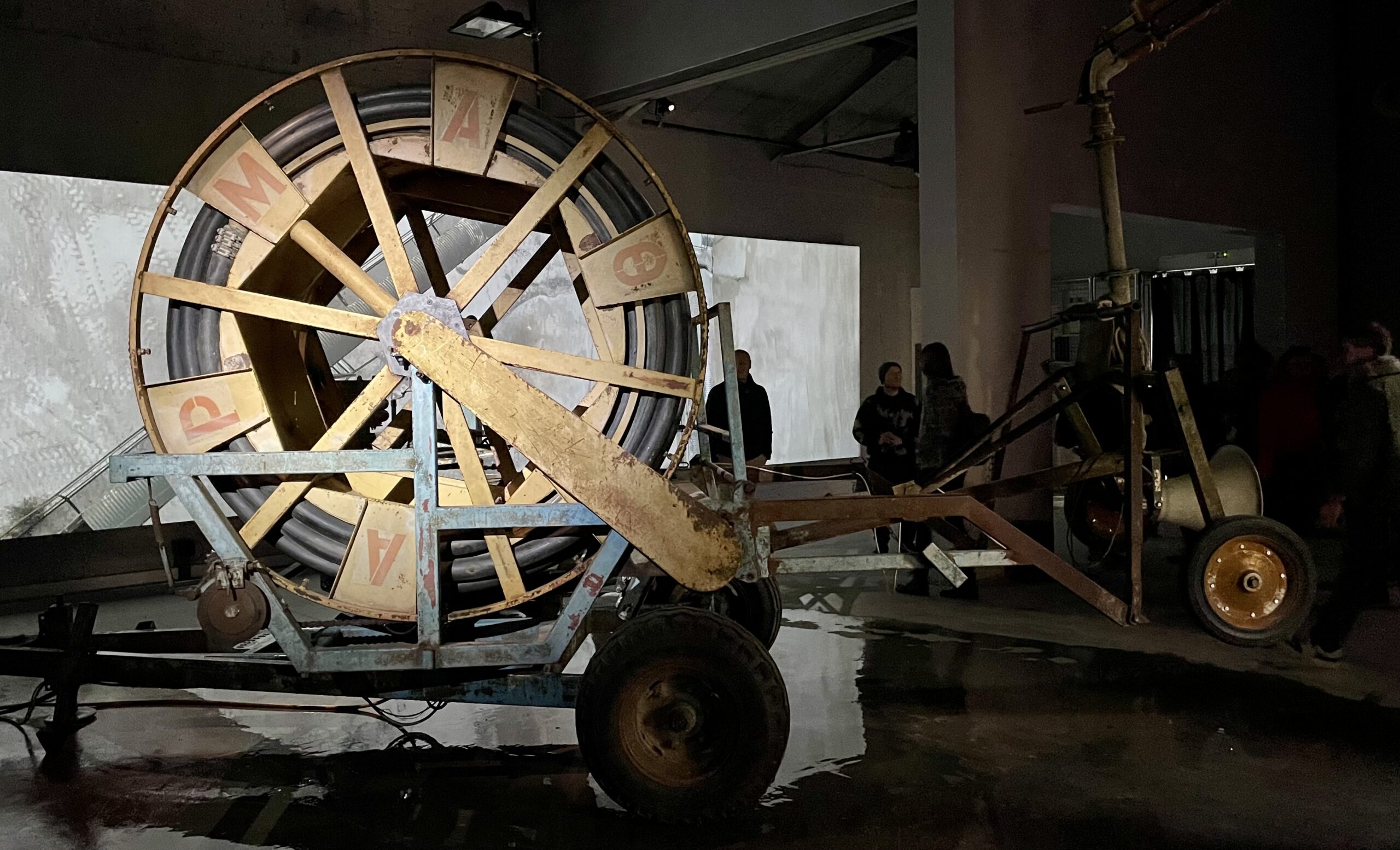
★★★★☆The Greek pavilion , VeniceCurated by Panos GiannikopoulosOn until 24 November 2024It’s Sunday in the village. Every week, the Greek state broadcaster sends a camera crew to record the harvest festivals, crochet-making displays, and wedding rituals of a rural locality. The programme has been running for decades. The nation’s hamlets anxiously wait their turn in the spotlight, knowing that the camera can turn milk maids and grocers into celebrities. Each wants to showcase their custom, more ‘diverse’ than in a contemporary art curator’s wet dream.
But it is wet and dark in Xirómero. Arriving on location in this Western Greek region, the crew found the pavilion deserted. A sound and light show synced with the movement of agricultural equipment makes for an eerie trace of past revelries which still play out on screen installations, posters, and stacks of plastic garden chairs. The famous Greek hospitality has turned into dystopia, sustained only by tricks of technology.
This display is aesthetically rich and pleasurably hard to parse. Recent Greek pavilions lamented the nation’s financial and political woes, which were in part caused by the very ideologies that now try to ‘diversity’ the OG city-state. If the Hellenic Republic tried to find the ‘foreign’ in Wester’s civilisation’s cradle as per this Biennale’s dictum, it drew a blank and missed even itself.

Some May Work as Symbols: Art Made in Brazil, 1950s–70s
★★★★☆Raven Row , LondonOn until 5 May 2024The premise of this ambitious but unavoidably manipulative review of Brazilian aesthetics is that art history can catch modernity in splitting from the past and thus from itself. Raven Row’s programme has long mined Britain’s 1970s for this phenomenon. Now Brazil – a timeline familiar to art historians but distant enough to do the curator’s bidding – offers its turning points as a destination.
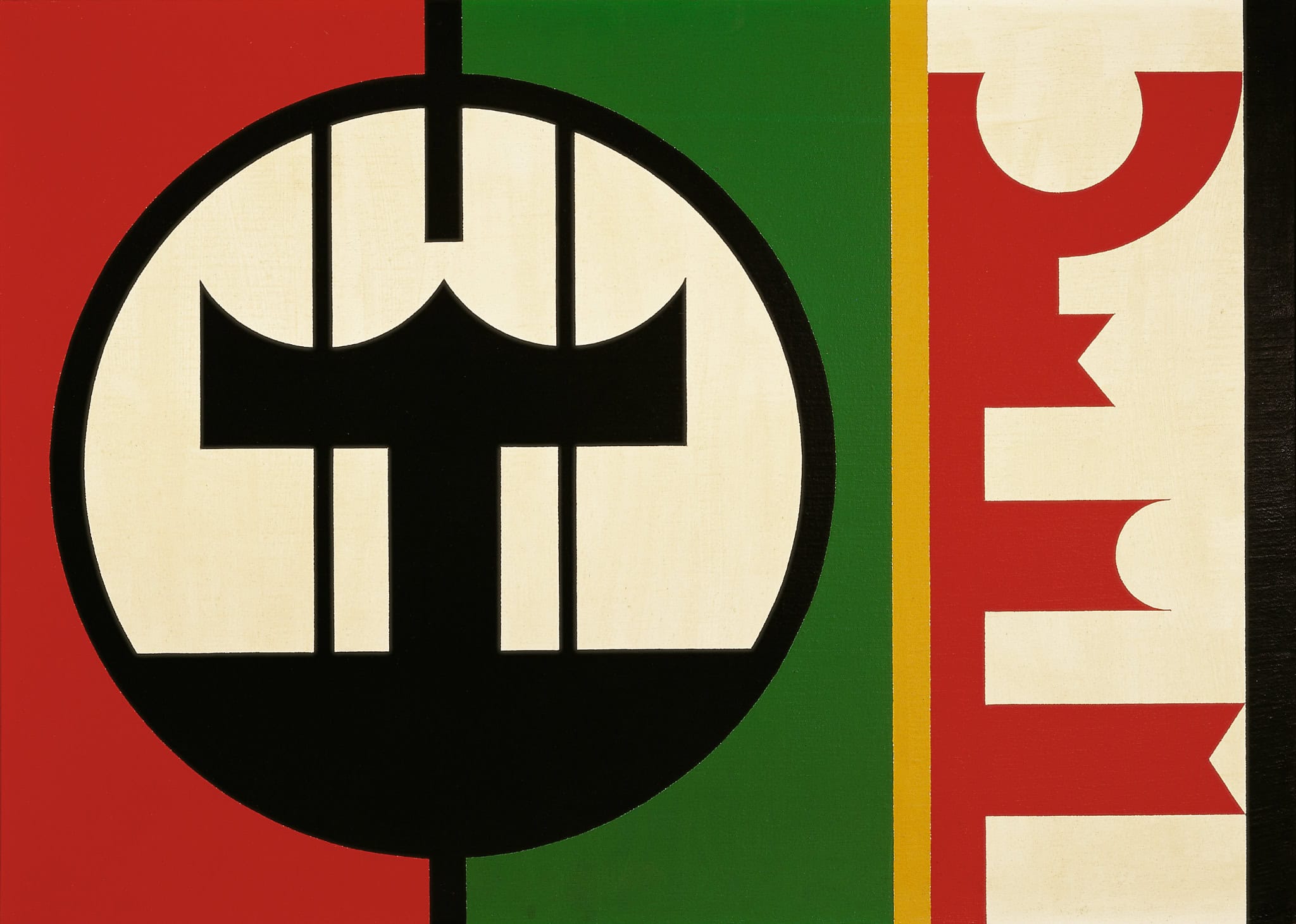
The show’s trick is to contrast communal and ritual works with the greatest hits of Brazil’s geometric abstraction. Elisa Martins da Silveira’s carnival street scenes hang next to Lydia Pepe’s monochrome grids as though there was nothing between them. This tactic makes the chasm between the thesis ideas wide enough to swallow all nuance. The meme which rhetorically compels the lost “modern man” to “reject modernity” and “embrace tradition” might thus have been an apposite poster for this exhibition.
The project recovers, however, precisely in repetition and excess. Each turn has a standout and both the past and the future finally have their aesthetic triumphs. Looking on from the crossroads, it’s hard not to marvel at Willys de Castro’s spirit-level paintings and then not to sing with the wild birds of Madalena Santos Reinbolt’s affectedly naive tapestries. The same, crucially, is true in reverse.
 Ignacy Czwartos
Polonia Uncensored
★★☆☆☆Viale IV Novembre, 8 , VeniceCurated by Piotr BernatowiczOn until 17 May 2024Czwartos’ pseudohistorical paintings were to be Poland’s official Biennale entry until a change of government last winter thew them on art history’s scrap heap. That they now hang in a pop-up outside the Giardini walls proves that the deposed populists care as little for art as the liberals who again control Poland’s art scene.
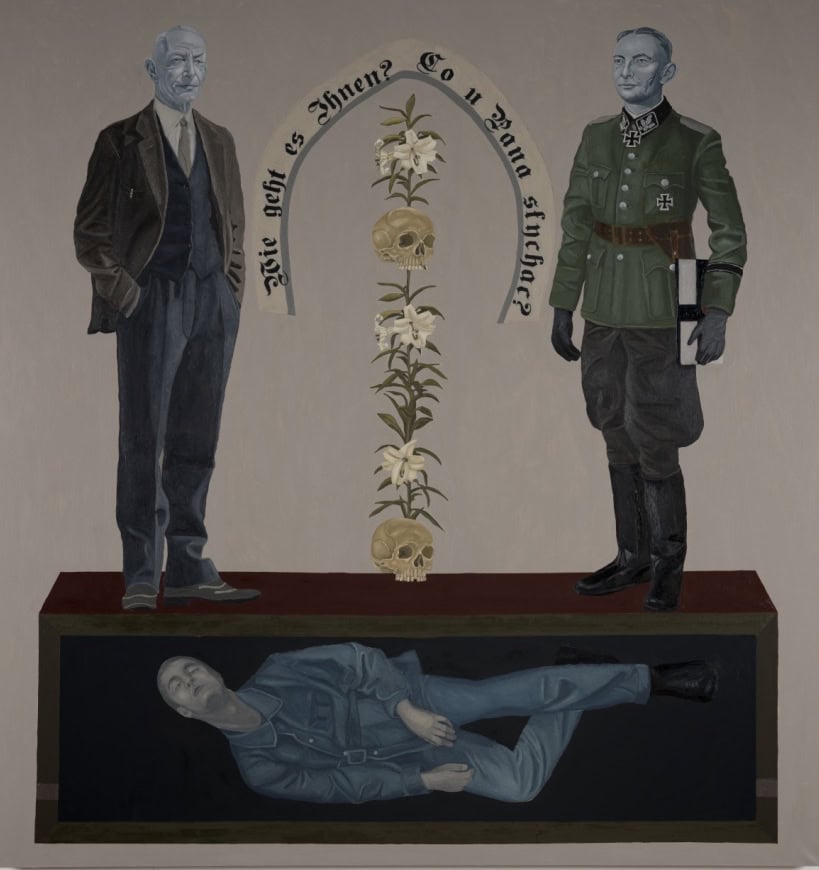
These images claim to tease the nation’s sore historical blind spots. Czwartos’ canvases laud Poland’s 20th-century martyrs in a bleak colour palette. Leaders of the national armed resistance who perished in the Nazi occupation and anti-communist activists killed by their own state peer from the walls like paper props in a school re-enactment.
Litigating old crimes is on point in this Biennale. Why, then, were these well-known stories disqualified from the decolonial orgy? Czwartos stepped too far by shaming the abusers in his historical diorama. Next to a named SS soldier, he painted Putin and Merkel, thus suggesting that this history is also the very present. He may not be wrong. His painting, however, proves little, and his sign-writer’s hand loses art history’s bet just for now.
 Șerban Savu
What Work Is
★★★★☆The Romanian pavilion , VeniceCurated by Ciprian MureșanOn until 24 November 2024What happens to the worker when work has no purpose? In a series of social-realist paintings so extensive that to not think of the labour which went into making them is impossible, Savu traces the as-yet imaginary terminus of Romania’s socialist utopia.
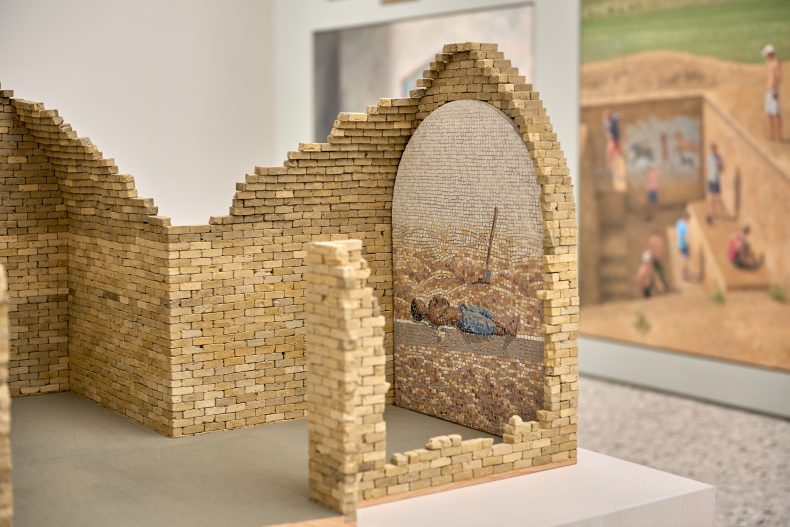
This Elysium is part panel house block, half Roman ruin. Mosaic reconstructions and faux archaeology spread from the canvas into museum-like models that the Socialist Republic of Romania would have been proud to exhibit in the same location in the 1960s. Savu’s t-shirt-clad 21st-century gentlemen explorers, however, betray his installation’s timeline.
These future young men have little to do but look ill at ease in their leisure. The reason comes clear at an offsite location where workers make artefacts for Savu’s production under the gaze of Venice’s leisurely tourists. This offshoring project, one fancies, drives these labourers envious of their future selves which in Savu’s archaeological fancy will face only themselves.


Your Ghosts Are Mine: Expanded Cinemas, Amplified Voices
★★★☆☆Palazzo Franchetti , VeniceCurated by Matthieu OrleanOn until 24 November 2024If Venice awarded a Golden Lion for the slickest geopolitical curating, it would go this year to Qatar’s display of some forty video installations from the MENASA region. ‘Expanded cinema’ was a fad in the West maybe fifteen years past, but the kinds of budgets required to let every filmmaker claim multiple projectors only later became the norm for art in the Middle East. This colossal show more than makes up for any historical shortfall as it deploys video’s most lavish smoke and mirror techniques to frame human journeys across desert and sea.
On paper, there’s plenty to cherish here. Cherri, Neshat, or Shawky are all surely binge-worthy, and the rest of the hundred-hour programme should not be taken lightly. But this project’s ‘expansion’ leads instead to fragmentation. The multiplicity of narratives and the exhibition’s non-linearity wrap the mind around the cinematic apparatus instead of allowing it to follow the works on their own. This attempt at building pan-Arabic film aesthetics, therefore, falls prey to the art technician’s trickery and buries the expended film fad for good.
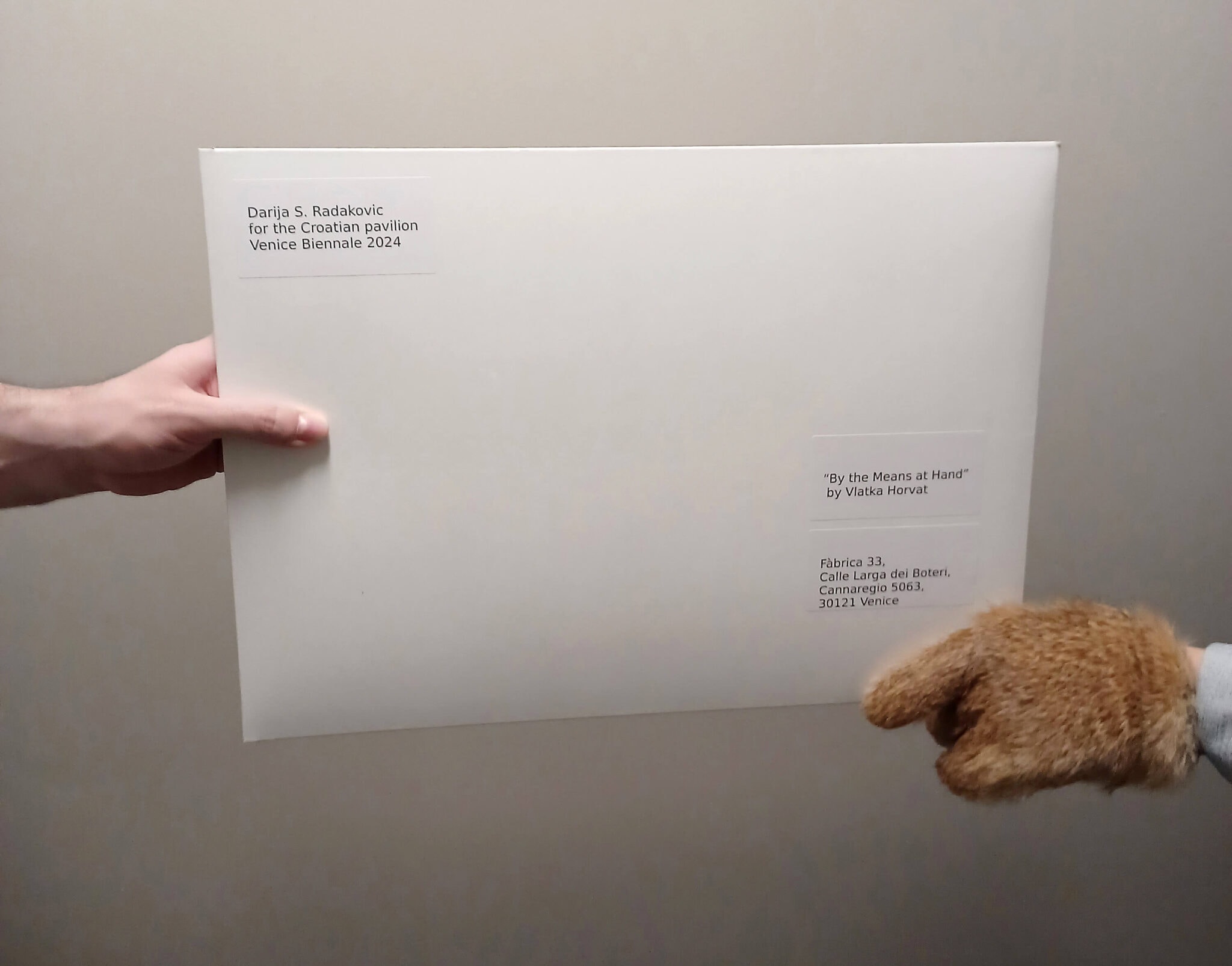
 Vlatka Horvat
By the Means at Hand
★★☆☆☆The Croatian pavilion , VeniceCurated by Antonia MajačaOn until 24 November 2024The elegant simplicity of Horvat’s project should have been a breath of fresh air in the ideologically fecund edition of the Biennale. Responding to Adriano Pedrosa’s facile call to foreignness, the London-based Croatian artist solicited reflections on non-belonging from her international crowd of art world friends, thus starting a letter chain.
The pavilion is filled with cutesy poems and doodles. “Young man (35) from Sarajevo seeks a person to discuss art with” jests one, “return to Serbian poets all their books” urges another. Hundreds of these pieces and printouts of the emails which gave rise to them are on show in a sleek purpose-made archive management system which accounts for one of this review’s stars.
Art history books claim that mail art was something once. Horvat’s presentation today, however, is so banal that it puts this legacy to a test. It turns art into a record that might come in handy to an NGO worker reporting on art world networking. Entirely by design, then, this closed circulation speaks to and agrees with only itself.
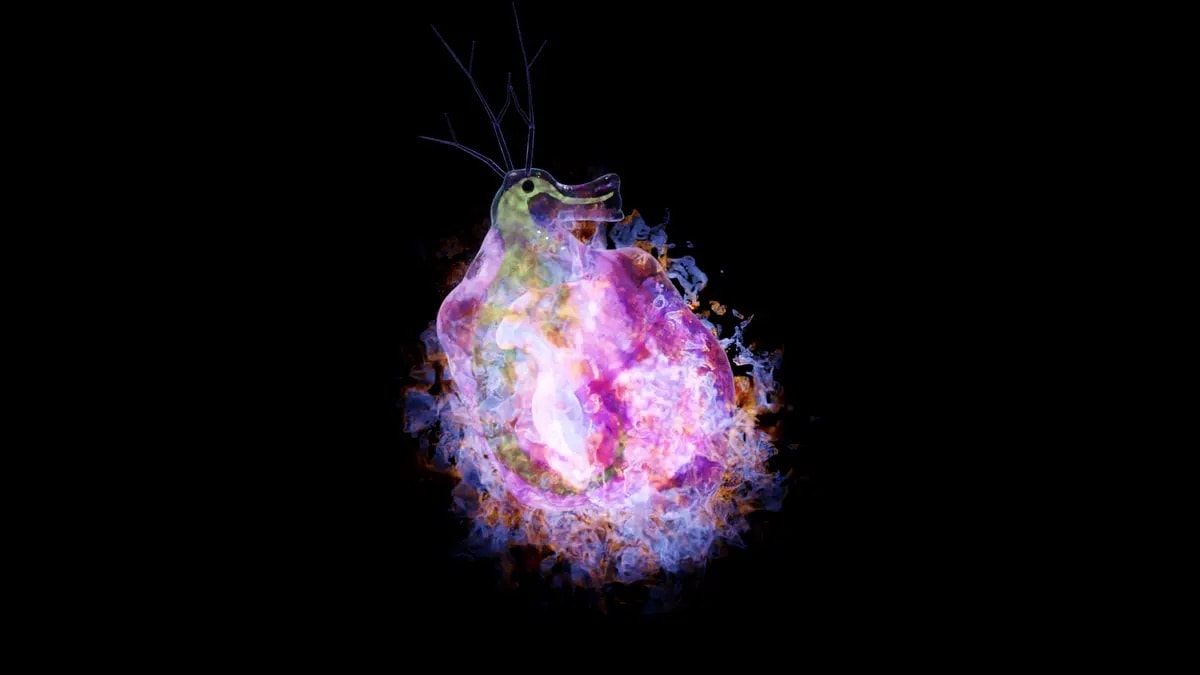

Ntjam’s Biennale presentation has all the hallmarks of world-building ambition. For one, it boasts two separate locations, one dedicated solely to the work’s public programme. The main feature is housed in a giant purpose-made structure which occupies a third of an exceptionally spacious courtyard. The shiny blue surface of this installation plays here the part the monolith from Kubrick’s Odyssey and gestures at an epic inside.
The scenography and the screening room’s seating are equally lavish. The giant image, too, breeds high expectations, billed as it is as a retelling of an obscure creation myth sourced from Mali’s Dogon people and remade with AI backing for a mythleas generation.
Whatever the AI did here entirely breaks the spell. Ntjam’s animation holds the appeal of a lacklustre PC screensaver from circa 2015 and so not because of its budget but due to the artist’s lack of narrative prowess.
Sea creatures and stones drift across the screen, beating no life into each other, let alone the world. This is what transhumanism looks like when it tries to root itself in pseudoscience and half-digested tales. Ntjam’s project suffers also because her chosen subject matter, unlike the creation myths of lasting civilisations, has little application in the world it gave rise to.
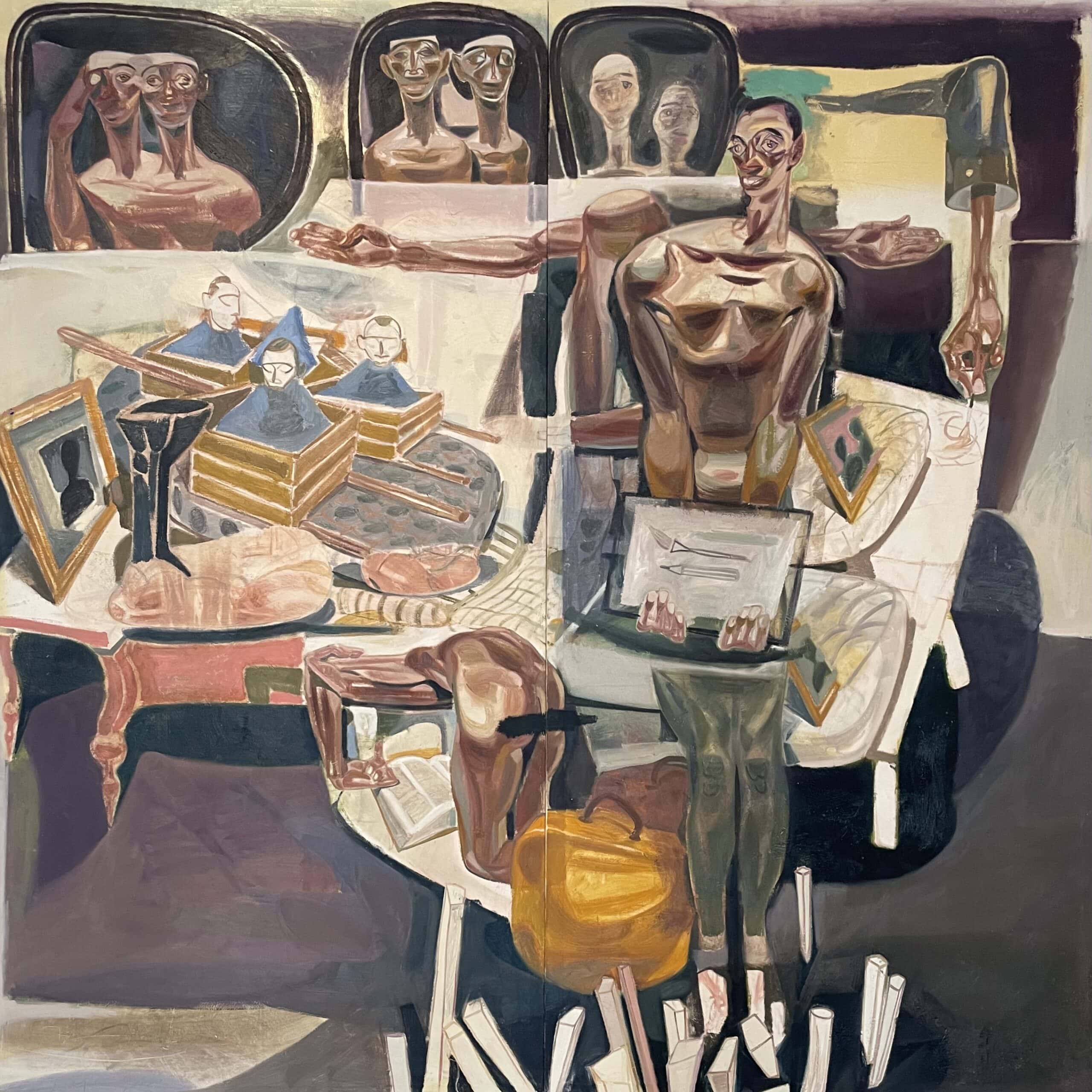
 Tesfaye Urgessa
Prejudice and Belonging
★★★★★The Ethiopian pavilion , VeniceCurated by Lemn SissayOn until 24 November 2024Urgessa’s collective portraits exude unsettling calm. Groups pose for the painter having arranged themselves as though for an anthropologist’s camera. The bodies on the canvases are half undressed, half hidden among ritual but contemporary objects that make up symbols of deep time and even deeper knowing.
The artist’s hand is present in these pictures, too, along with his arm, torso, and in one painting his buttocks. Some of the subjects’ faces turn out to be mere reproductions, as if collected from some forgotten atlas. Others are contorted in love, death, or merely life and it is no longer obvious if Urgessa walked in on a wedding feast or some backroom orgy.
Perhaps this is a timeless idyl, perhaps some personal and tragic stories make up this dance of body parts. But even when doubt becomes overwhelming, Ugressa grants his subject the command of his canvas. In the politically rigged Venice, this gesture is as necessary as air.
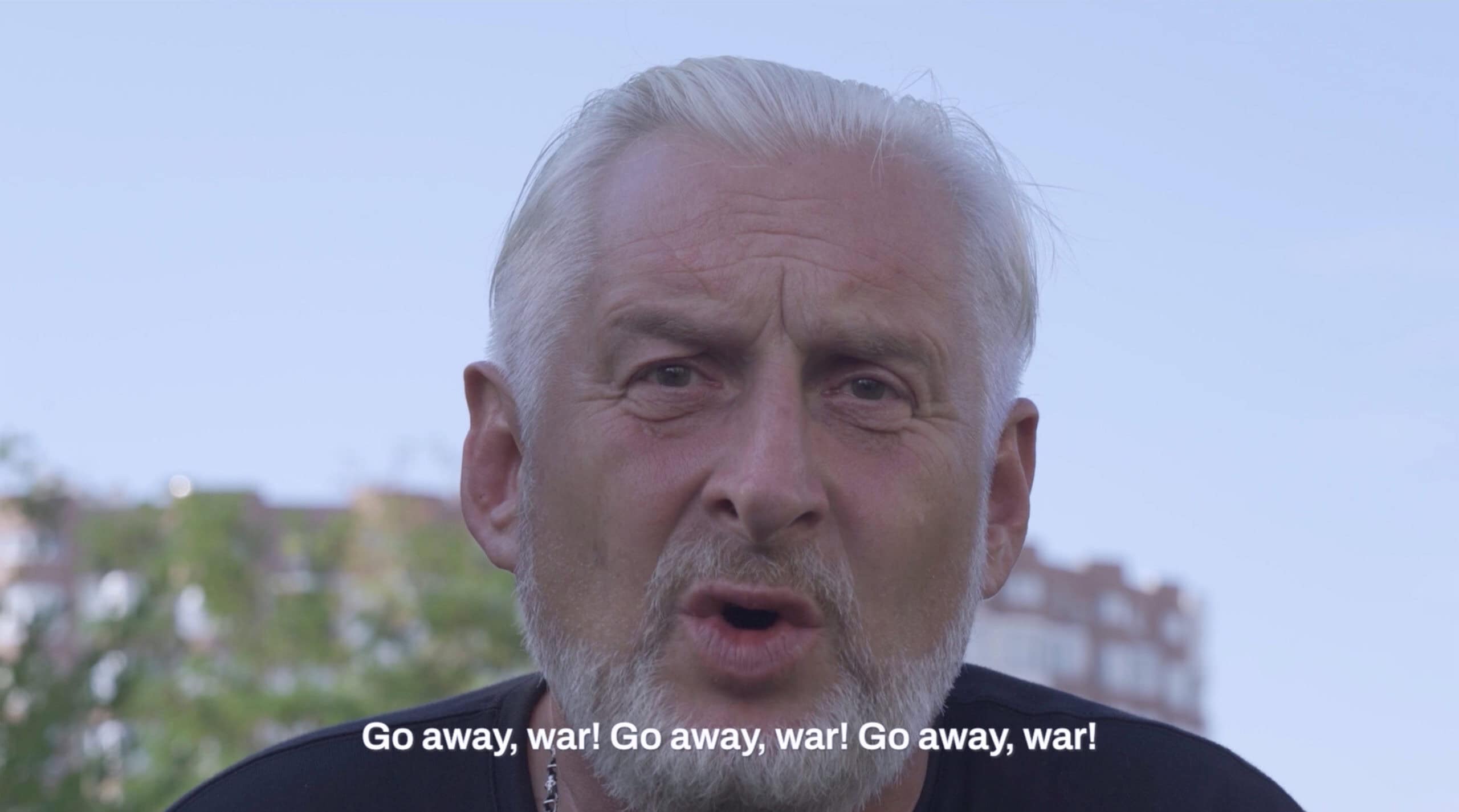
 Open Group
Repeat After Me II
★★★☆☆The Polish pavilion , VeniceCurated by Marta CzyżControl over the Polish pavilion passed to a Ukrainian project in December when the freshly-elected minister of culture unceremoniously pulled the plug on his predecessor’s favourite Ignacy Czwartos’ proposal of history painting. In place of the promised series of hammy tragic images that would promote Poland as the victim of history, Open Group now presents a video diptych in which the tragedy is Ukrainian.
From the screen, displaced men and women lead a would-be performance, inviting the audience to imitate the sounds of gunfire, artillery rounds, drones, and an air raid. They do this with the patience of kindergarten teachers and their didactic efforts are aided by karaoke-like subtitles. Some viewers do join in, eliciting stifled but sympathetic laughter from others.
This isn’t bad propaganda and not terrible art, either. It does, however, portray Ukrainians as aimless, stunted, and lacking the capacity to make their own decisions. Whether this view is accurate or not, it happens to be what the country’s Western allies want of it. NATO would rather be saving Ukraine’s children than contend with its broader responsibilities. At the pavilion’s opening, the crowd’s applause was rapturous. A sense of tragedy, however, was altogether missing.

 Eva Kot’átková
The heart of a giraffe in captivity is twelve kilos lighter
★★☆☆☆The Czech pavilion , VeniceCurated by Hana JanečkováOn until 24 November 2024Having exhausted her options as the leading Eastern European female collage artist – an accolade which quickly leads to type-casting – Kot’átková has turned to collaging the world’s story in 3D. Her lament of the giraffe Lenka, who died after only a brief spell in the Prague zoo in the 1950s, is a cross between a children’s adventure park and a biology lesson taken by a substitute history teacher. Lenka’s innards are rendered in plush pink and red cushions and her cardiovascular system is one with the building’s plumbing.
So far, so amusing, and so open for the imagination. Lenka would make a powerful symbol of the costs of the friendship of nations and the impressive, though stunted stature of the Czechoslovak dream.
Alas, Kot’átková desperately needed this giraffe to broaden her future career prospects. To this end, the animal’s soft guts were deftly co-branded in the exhibition by a group calling itself Gesturing Towards Decolonial Futures who boasts “links to indigenous peoples” of Canada but no expertise in zoology. In her short life, Lenka was a victim of a safari and an ideological stunt. Her taxidermied corpse is now host to another.
Inspired in form and attitude by Manhattan Art Review.